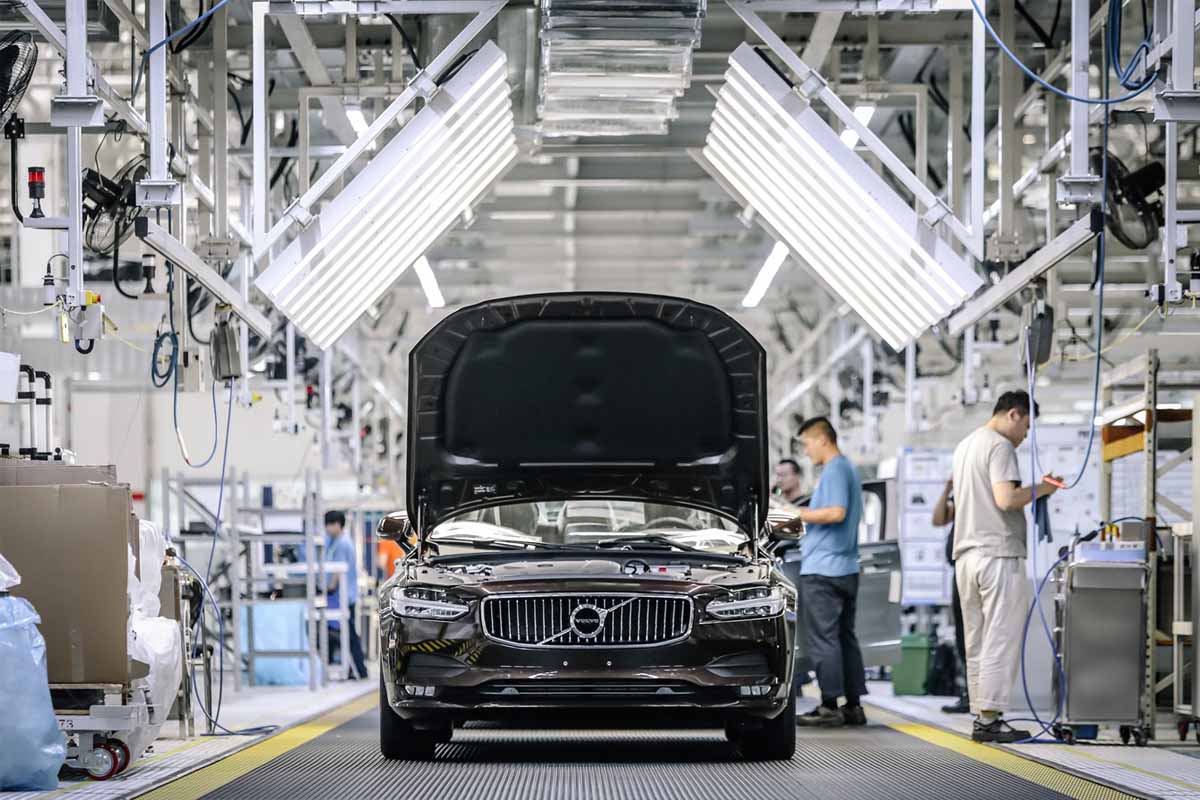
Volvo Cars has announced it will cut approximately 3,000 white-collar jobs globally as part of a sweeping restructuring plan designed to offset rising costs, global trade tensions, and a softening electric vehicle (EV) market. The job cuts, which represent around 15% of its global office workforce, are a core element of the company’s SEK 18 billion ($1.9 billion) cost-reduction strategy launched in 2025.
The announcement follows a challenging second quarter in which Volvo Cars booked a SEK 11.4 billion ($1.2 billion) one-off charge tied to U.S. import tariffs and delays in launching key EV models such as the EX90 and ES90. With the United States imposing a 25% tariff on China-made vehicles, Volvo has been forced to rethink its global supply chain and accelerate plans for regional manufacturing. The company paused production at its Charleston, South Carolina plant in May but now plans to ramp up production of certain EV models in both the U.S. and Europe to reduce tariff exposure.
While Volvo remains committed to its all-electric future—aiming to become a fully electric carmaker by 2030—the near-term pressures of tariffs, inflation, and declining demand for premium EVs have significantly impacted profitability. In May 2025 alone, Volvo saw a 12% drop in vehicle sales year-over-year, with a 27% decline in EV deliveries. These market conditions, combined with global economic uncertainty, led the company to suspend its financial guidance for the remainder of the year.
The restructuring will impact roles in corporate departments such as R&D, HR, marketing, and IT. Volvo executives emphasize that the move is not a retreat from innovation, but rather a recalibration intended to streamline decision-making, improve cost efficiency, and protect long-term investments in electrification. The job reductions are expected to be completed by autumn 2025.
Volvo’s move mirrors similar actions by other automakers grappling with the complex effects of trade policy, rising materials costs, and evolving consumer behavior. For Volvo, the challenge is balancing its ambitious EV strategy with the realities of a volatile global market—especially one increasingly shaped by regionalized production and protectionist trade measures.
Despite these short-term disruptions, Volvo continues to push forward with the launch of its electric EX30 and the delayed EX90 SUV, while exploring ways to localize production and minimize future tariff exposure. The restructuring plan is seen as a critical step toward safeguarding the company’s competitiveness and preserving the resources needed for long-term EV leadership.

Reporter